In the field of Artificial Intelligence (AI), Neural Networks have emerged as one of the most revolutionary technologies. They mimic the way humanity thinks and learns, providing an effective approach to solve complex problems. In this blog post, we dive deep into what Neural Networks are, how they work, and their various applications in today’s technological landscape.
What are Neural Networks?
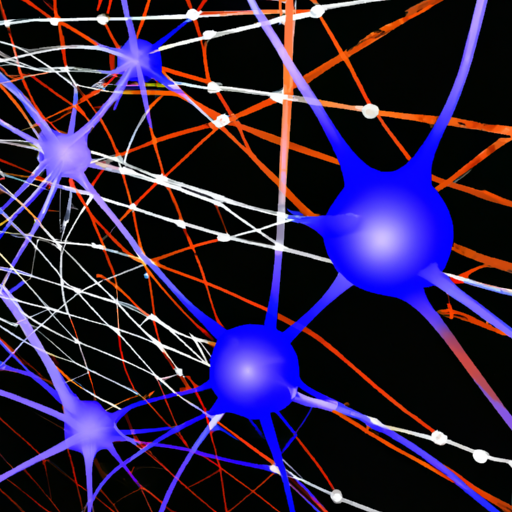
Neural Networks are computational models that are inspired by the human brain’s architecture. They consist of interconnected nodes, or neurons, that process data and learn from it. These networks can identify patterns, classify data, and make predictions, making them a cornerstone of Machine Learning and Deep Learning.
Architecture of Neural Networks
The basic architecture of a Neural Network includes an input layer, one or more hidden layers, and an output layer. Each neuron in a layer is connected to every neuron in the previous and the following layers. This interconnectedness allows for complex transformations of the input data, enabling the network to learn intricate patterns.
- Input Layer: The first layer that receives input data.
- Hidden Layers: Intermediate layers that apply transformations to the input.
- Output Layer: The final layer that produces the result after processing the input data.
How Do Neural Networks Work?
Neural Networks learn from data through a process called training. During training, the network receives input data and adjusts its internal parameters through techniques such as backpropagation and gradient descent:
- Forward Pass: Input data is fed through the layers to generate an output.
- Loss Calculation: The predicted output is compared with the actual output to compute the loss.
- Backpropagation: The Gradient Descent algorithm is applied to minimize the loss by adjusting the weights of the neurons.
Applications of Neural Networks
Neural Networks have a wide array of applications across various fields:
- Image Recognition: Used in systems like facial recognition and automatic tagging in photos.
- Natural Language Processing (NLP): Powers applications like chatbots, translation services, and sentiment analysis.
- Healthcare: Assists in diagnostic systems and predictive analytics for treatment plans.
Conclusion
Understanding Neural Networks is crucial for anyone looking to delve into the field of AI and Machine Learning. Their ability to process vast amounts of data and learn from it has transformed various industries, making them a powerful tool in our technological arsenal. As we continue to evolve, we can only expect the applications of Neural Networks to grow.
For more insights into Artificial Intelligence and Machine Learning, stay tuned to our blog!